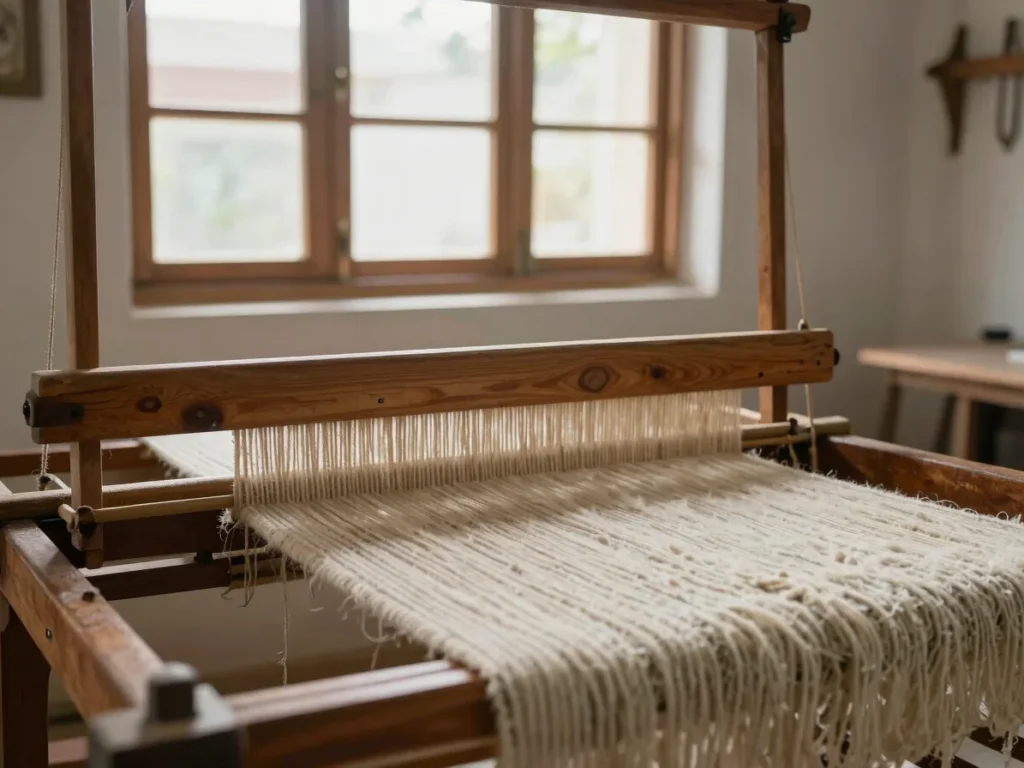
Each KNOTS LIVING rug is shaped by hand, one knot or tuft at a time, from fibre sorting through final washing. The process is slow by design, because density, pile and structure are what make a rug last.
From Fibre to Floor
Five Stages of Making
01
Fibre Sorting
Raw wool, cotton, jute and silk are sorted by staple, colour and quality before any spinning begins.
02
Yarn Spinning
Fibres are spun into yarn by hand, giving each rug its characteristic texture and pile consistency.
03
Loom Setting
The warp threads are stretched on the loom and aligned so the weaver can work with even tension.
04
Knotting
Each knot is tied by hand, row by row, following the design. Knot density shapes the rug's depth and durability.
Choosing a Structure
Three Weaves, Three Characters
Each technique creates a different surface and feel. Choose by how you intend to live with the rug.
Hand Knotted
Dense and Enduring
Individually tied knots on a warp foundation produce a firm, long-lasting pile suited to daily use.
Hand Tufted
Plush and Layered
Yarn is tufted into a backing and finished for a soft, dimensional surface with a generous feel underfoot.
Flatweave
Geometric and Light
Kilim-style flatweaves interlace warp and weft without a pile, showing graphic patterns and natural dye depth.